 How do most folk end up in the jobs they’ve got? A bit like religion, parents have a lot to do with it: there’s an identity there, a self-making in the day to day ofwork. Familiarity, too, seems to matter: the idea of a life and what it could look like. It’s not just about money when someone is the first in their family to go to college (though god, also that). It’s a matter of imagining what’s possible: that I saw my father being a professor, running a lab, and so I wasn’t intimidated by the idea. That I saw my brother go to a fancy school, so I thought, maybe that’s not forbidden to me. (If anything, I was too familiar: little of the shine on it, since I knew how the sausage gets made. So when a prof didn’t impress my adolescent self, I wasn’t as motivated to try to impress the prof. This was good and bad for me, friends.)
But of independent bookstores, I’ve seen a different path: sometimes a parent runs a shop, sure. An aunt or uncle. But these days, I’ve heard of just as many folk changing careers entirely. Why do they do it? They’ll tell you it’s for their love of books, of community, of the funny conversations you get to have when you man a desk like that—the ones who come in all the time (we love you, local readers!), to the ones who are just there for That One Birthday Present; to the ones who don’t think of themselves as “readers” but are caught up in a topic and a book just so happens to give them a new way of thinking about the thing and so… Sometimes choosing to open a bookstore comes from a kind of physiological craving (“Have you ever smelled a fresh box of books the day it’s delivered? Seriously, Cat, have you?”) and sometimes it’s just the sheer charm of the entire idea. Some kind of opposite of the Rat Race. The nothing-at-all like Wall Street or Tech Jobs or Boeing.
It’s also a remarkably hard thing to do. It takes money to start it and it a lot of sweat to keep it going and the margins are razor thin. It’s no more a mark of personal failure when an independent bookstore closes than anything else in that realm of difficulty.
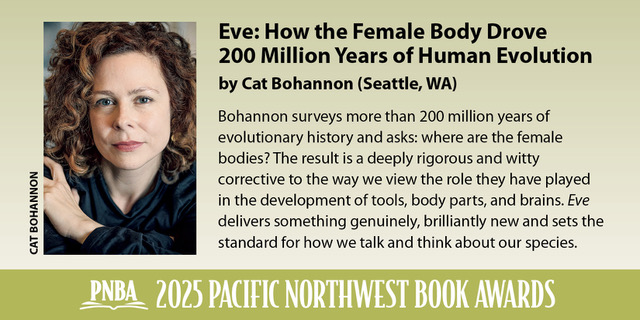
That’s part of why I’m so impressed by how many of these bookstores opened and succeeded in the last 10 years. While I was toiling away in my little work cave in Seattle, bashing my head against my grad school research and climbing Mount Physiology to write Eve, somehow—really all across America, I hear—independent bookstores were actually coming into being. Rather than a story about the success of giant corporate megaliths, something about these communities of readers were making independent bookstores succeed, quite against the odds. And it cheered me. Honestly—not just because I’m getting this nod, which is an honor, for Eve’s little contributions to their success around here—but because after a lifetime of activism in the queer community, I’d gotten very used to stories about corporations swallowing all spaces of resistance. I knew people in the music industry, in publishing, in the performing arts. The intrusion of corporate interests into the Academy, too. This continual erasure of places for independent thought. But somehow, independent bookstores? Actually doing well! So many of them. And I thought, damn. Maybe we’re gonna be alright after all.

Ravenna Third Place Books in Seattle, WA is proud to host Cat Bohannon for the paperback release of Eve, the release of the young adult adaptation, and her Pacific Northwest Book Award celebration on Wednesday, February 26, 2025 at 6:00. That’s a lot to celebrate! Free tickets are available at the store’s website.
Watch this site for more information about the Pacific Northwest Book Award winner events hosted by independent bookstores around the region.
NWbooklovers posts original essays from this year’s award winners as featured posts in January and February. You can enjoy essays from past winners of the PNBA Book Award in our archive.


