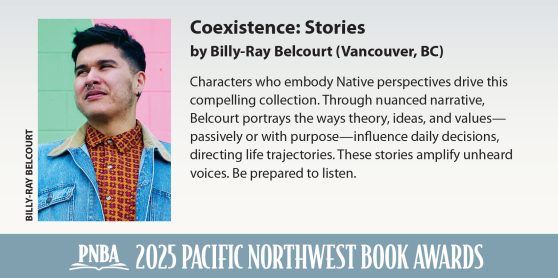
 I did not know that I would find pleasure in the rain. I grew up in northern Alberta on the edge of the subarctic, where everything is covered in snow for several months of the year. I moved to Vancouver, BC to teach and to write. It rained every day that first January. I was often wet and cold, but I had not been worn down. I felt that an aspect of my interior life was related to that unrelenting downpour. Related in the sense of kinship, connection. I, too, was ready to unravel, explode. I had been working on my novel, A Minor Chorus, which is about a queer Cree doctoral student who turns to fiction to better understand the way history endured in the present in northern Alberta. Then, COVID hit and we were in lockdown. I was foreign to Vancouver but not to the rain; it welcomed me.
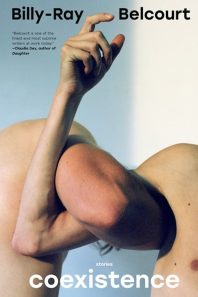
Over the next few years, I began to feel at home on the west coast – the ocean, the mountains, the grey days all rooted inside me and became my regular life. I always assumed I would only write about Alberta, but when I was working on the stories that would make up Coexistence, I kept thinking about the sea wall that lines my neighborhood and how the ocean will reclaim it all in due time.
Vancouver is located on the unceded and ancestral territories of the Musqueam, Squamish, and Tsleil-Watuth; it is these nations and their ongoing practices of culture and politics that I seek to honor in my teaching of Indigenous writing. What does it mean to live on unceded territory? For me, it means to believe in the necessity of Indigenous resurgence. In my fiction, it means to believe in the possibility of another way of living, that another world is possible. Fiction is a place to share in the desire for this uncededness to give way to the end of the colonial project. I am a guest in Vancouver; one day, I will return to my own ancestral lands. The stories in Coexistence set in Vancouver register this transience, but they also demonstrate my interest in a literature of the weather. In “Poetry Class,” I write:
“Rain made us weepy, but it also made us introspective. It made us decide if we loved ourselves or not. Rain left an aroma of desire in the air. It was desire incarnate, something that could leave us drenched and shivering. Desire could fall on us without reprieve.”
We have to continue in our art to give expression to our desire for Indigenous futurity. That is the overall aim of Coexistence, and of my work more broadly. It was in Vancouver that I realized that desire could be in the air, could be the rain in and of itself.

Watch this site for information about the Pacific Northwest Book Award winner events hosted by independent bookstores around the region.
NWbooklovers posts original essays from this year’s award winners as featured posts in January and February. You can enjoy essays from past winners of the PNBA Book Award in our archive.


