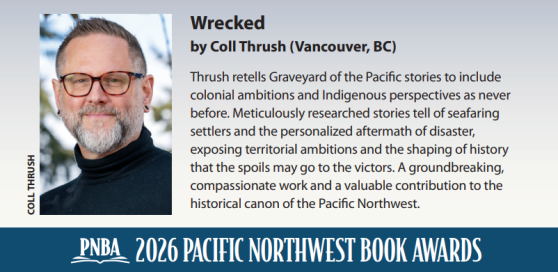
 I am an unrepentant regional chauvinist. I believe in my heart that those of us lucky enough to call the Pacific Northwest home live in one of the best places on the planet. Perhaps because I was raised in the region—at the base of the foothills of təqʷubəʔ (aka Mount Rainier)—I have always had a deep affinity for our part of the world. Devil’s club, red cedar, skunk cabbage, steelhead, geoducks, varied thrushes: all the iconic elements of the landscape in these here parts are at the core of my sense of place and selfhood. Indeed, my entire venture into historical practice was, from its inception, deeply informed by my connection to the Northwest Coast. I wanted to understand where I lived.
But.
What does it mean for someone like me to claim allegiance to a region that historically speaking is not mine? When a settler says “I’m home,” what cultural and political work does such a statement do? Most of my career has been concerned with these questions, beginning in my graduate school years at the University of Washington, which resulted in Native Seattle. In that book, I examined three strands of Indigenous history in the city—the experiences of local Duwamish people, the 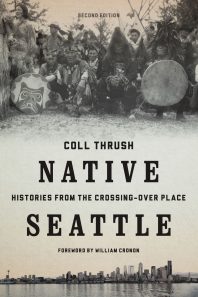 journeys of Native migrants from many places who came to call Seattle home, and the use of “Indian” imagery in the civic landscape—to show how urban and Indigenous histories, far from being mutually exclusive, in fact were and continue to be deeply entangled. My goal was to produce a useful disorientation for readers (and for myself): taking a familiar place and turning its story on its head. Native Seattle has had a very good life, largely without me, and I am still proud of the ways in which my own sense of place informed the research and writing in ways that have spoken to many Seattleites, settler and Indigenous alike.
After the publication of Native Seattle, I made a significant diversion and turned my sights on the centre of a global empire: London, England. For close to ten years, I conducted research on and wrote about Indigenous travellers to London, willing and otherwise, from places that became the US, Canada, Australia, and Aotearoa New Zealand. The story began in 1502 and continued into the present, and writing Indigenous London allowed me to explore one of the world’s great cities, its urban landscape, and its reach around the 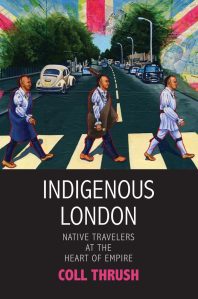 planet. In many ways, in fact, Indigenous London is a sequel to Native Seattle. At the same time, it wasn’t my place, even if London’s sense of itself is so very strong and so easy to translate into written form. I will always be merely a visitor to the city on the Thames.
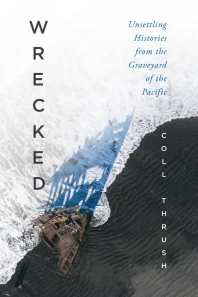
And so, Wrecked is my return to the curve of coast that I know best: the places I went as a child, the locations I worked as a young adult, and the land- and seascapes that still matter so very much to me today. It has been something of a homecoming to write about shipwrecks, such an iconic and evocative element of regional history, and touring the book around Washington, Oregon, and British Columbia has given me an opportunity to meet with readers who share my love of this place, even as we are all caught up in the consequences of colonialism here.
I end every book I write with a question. In Native Seattle, it was “What happened here?” Indigenous London, meanwhile, ended with “When did we become real human beings?” And Wrecked, in which I used the tides as a metaphor for the comings and goings of empire, ends with “Is the tide still coming in, or is it going out?” as a way to think about what might come after the interruption of settler colonialism. My goal has been to leave the door open for the next writer, in the knowledge that history is a collective endeavour: we are all engaged in it, in the books we read, the stories we tell, and the places we love.
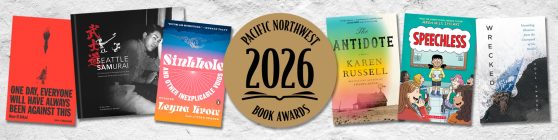
Celebrate with Coll Thrush at his award presentation party on February 5, 2026 at 7:00 pm at Elliott Bay Book Company in Seattle, WA.
NWbooklovers posts original essays from this year’s award winners as featured posts. You can enjoy essays from past winners of the PNBA Book Award in our archive.



[…] an essay for PNBA’s NW Book Lovers, Thrush asks, “What does it mean for someone like me to claim […]