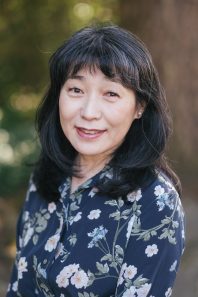
 Surrounded by towering Douglas firs and a nearby forest to visit anytime, I enjoy sharing my days with backyard bird visitors—especially hummingbirds. Gentle, calming, and grounding, life in north Seattle truly feels like home to me. For as long as I can remember, nature and animals have always brought comfort and solace to my anxious mind.
I was born into an affluent yet emotionally neglectful home environment in Japan. However, there was beauty and joy around me—a serene Japanese garden with a waterfall and a large koi pond, where I played with fish, and a constant dog companion—both of which served as my refuge. Still, inexplicable sadness and loneliness often followed me. Looking back, I see how this unstable foundation pushed my nervous system into a chronic fight-or-flight survival mode, leaving lasting imprints on certain behavioral patterns.
 Throughout my life, I struggled with anxiety, depression, low self-worth, and a harsh inner critic. I believed my difficulties were personal failures rooted in something inherently wrong with me. Sensitivity to rejection also affected my relationship with writing and publishing, entwining with the brutal realities of the literary and publishing world.
When seeking a literary agent, the barrage of rejections left me emotionally depleted, and I called it quits after dozens of attempts. My reaction to a writer friend’s suggestion to keep going until I hit 100 rejections was: “Seriously? What’s the point of collecting rejections? I’m done.” Yet deep inside, an internal struggle continued between the vulnerable writer—with a deadly combination of tremendous insecurity and fierce competitiveness—and the determined, tenacious author I’d become, mirroring the complex emotions I’d carried growing up. Ultimately, I came to terms with my decision to prioritize my mental well-being by stepping back from the endless treadmill of chasing external validation.
Not long ago, I stumbled across the term “complex trauma” while watching YouTube videos. I was struck by how its origins and symptoms perfectly captured my own experience. What felt most revelatory was the neurological explanation: when a child is exposed to prolonged toxic stress—whether visible trauma like physical or sexual abuse or invisible trauma such as emotional neglect—this threat to the child’s sense of safety fundamentally alters the developing brain and nervous system. It hyperactivates the brain’s alarm system, interfering with normal brain development. My cognitive distortions and negative self-perception turned out to be major hallmarks of survival strategies my mind developed to protect me as a child.
Realizing that what I’d long perceived as personal flaws were actually interconnected symptoms of something much deeper was a powerful eureka moment. This discovery brought relief and validation, providing language and frameworks to understand my lifelong struggles. It also helped me shift from self-blame to self-understanding, realigning my approach to writing—not as a task to conform or perform, but as a path to healing and connecting with others.
My psychiatrist diagnosed me with generalized anxiety disorder in 2016, but in our last session shortly before her retirement, I brought up my self-diagnosis of complex trauma, which she agreed with. While this condition is gaining awareness among mental health professionals and communities, public knowledge still lags behind. This gap in understanding has strengthened my resolve to use my memoir as an advocacy tool—to give voice to invisible wounds and raise awareness.
I also want to challenge the culture that shames and stigmatizes emotional struggles that are deeply human. If you see yourself in my story, please know that you are not alone, and your struggles are not your fault. Naming your pain and shining light on it through writing can be powerful first steps toward transformation and healing.
Discovering and understanding the root cause of my anxiety helped me practice mindfulness, self-kindness, and self-acceptance, both in life and in my writing. Healing is nonlinear and often messy. I’m learning to meet old habits with curiosity instead of judgment. This ongoing process is reflected in my storytelling—one that embraces complexity without demanding perfection.
I am grateful to be part of this vibrant Pacific Northwest literary community and to live in a city of literature.
Shigeko Ito grew up in Japan and immigrated to the United States in her twenties to pursue higher education. She studied early childhood development and education, earning a PhD in Education from Stanford University. Drawing on cross-cultural experiences and academic expertise, she explores themes of trauma, resilience, and healing, with a particular focus on childhood emotional neglect. She worked for many years at Montessori preschools and is an avid animal lover, especially of dogs, who enjoys birding, gardening, and raising mason bees. She lives in Seattle, Washington, with her husband of thirty years. Her memoir, The Pond Beyond the Forest, is available at bookstores now.





What a wonderful essay! After reading a memoir myself, I often wonder about the author behind the book and how her memoir came to be. This piece is a strong example of understanding more the person behind the memoir’s voice.
Thanks for being an invested reader, Nancy–of NWBL and in general!